
FAQ
Most frequent questions and answers
The cost of kitchen hood cleaning can vary depending on several factors, such as the size and number of hoods, fans, the level of grease buildup, the length of ducts, access panels, roof access, and the number of baffle filters. For an accurate estimate, we offer a complimentary assessment of your specific requirements. During this evaluation, we will also identify any deficiencies in your system’s compliance with NFPA 96 standards and provide separate quotes for necessary rectifications. Contact us today to schedule your free estimate.
At Clean It All, we strictly adhere to the NFPA 96 code and our PAC Certification requirements, ensuring full compliance. Unlike other companies that may have different standards, we prioritize reporting any deficiencies, regardless of whether they are rectified or not. Here are a couple of examples:
Example 1: According to NFPA 96 7.8.2.1. (8), rooftop terminations must have a hinged upblast fan equipped with a flexible weatherproof electrical cable and a service hold-open retainer to allow for inspection and cleaning. To meet this code requirement and prevent damage during lift-off and replacement, we will provide a quote to add hinges and a hold-open retainer to your hood fan.
Example 2: In accordance with NFPA 96 8.1.6.3.1, upblast fans should have an access opening of at least 3 inches by 5 inches (76 mm by 127 mm) or a circular diameter of 4 inches (101 mm) on the curvature of the outer fan housing for cleaning and inspection of the fan blades. We can offer a quote to add a 4-inch circular access to ensure easy cleaning and inspection of the fan blades.
At Clean It All, we prioritize code compliance and will provide tailored quotes for necessary enhancements to meet NFPA 96 standards. Contact us today to discuss your specific requirements and receive a detailed quote.
This is the ultimate question. Firstly, the Company has to be certified to NFPA 96 (the fire code for kitchen hood cleaning). Clean It All Ltd. is certified with NFPA 96 through PAC certification (our certification number is BC044-1) . Many Companies claim they are certified, but do not live up to the expectations of the certification. Others that have certification are not meeting all of the PAC Certification requirements including before and after pictures, detailed after service reports, notes on items which are NFPA 96 deficient, and quotations from us to put many of the previous back into code. We cannot rectify all deficiencies, as some may require professional skills outside our scope of work (i.e. Leaks in the Type 1 hood require a certified HVAC welder, and subsequent sanding of the weld to non-catch finish [NFPA 96])
- A pre-cleaning visit to properly quote the job will be done by a trained and knowledgeable employee who will not only quote on the job, but identify deficiencies in the NFPA 96 code for repair and reporting. Approval of the items within the scope of Clean It All will be quoted, and done at the same time as the hood cleaning, or shortly thereafter [i.e. opening a cleaning portal to the Up-blast fan on the roof to properly clean the fan blades, replacing light globes, installing grease catchment apparatus on the roof, cleaning grease accumulation from the hood, install hinges [NFPA 96 required] on the roof hoods for easy opening, etc.
- On the evening of service, the team will arrive, and all employees will be in uniform.
- The Crew leader will meet with the chef or site manager and do a quick walk-through in order to assess challenges and to describe the process in detail. The Crew lead will take before pictures of the roof fan, the roof duct, the kitchen hood, and any deficiencies.
- The Kitchen hood fan will be tested for operation on and off, as will the rooftop Up-blast fans
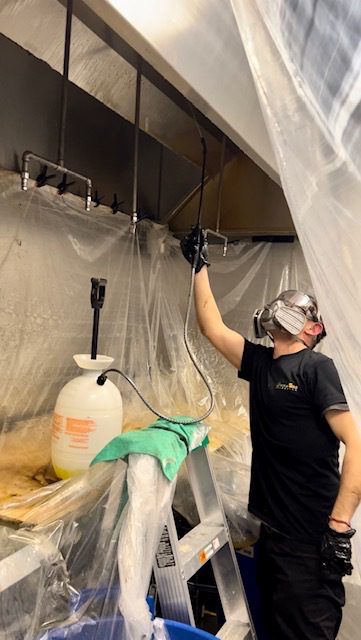
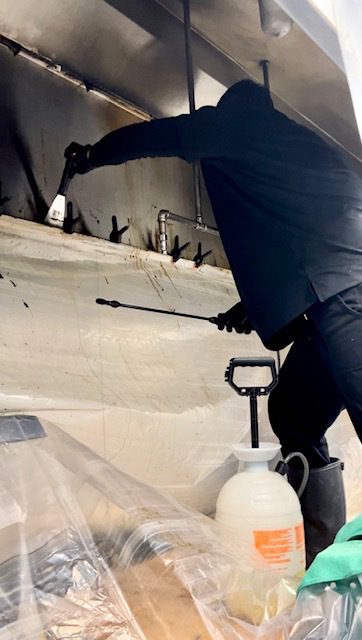
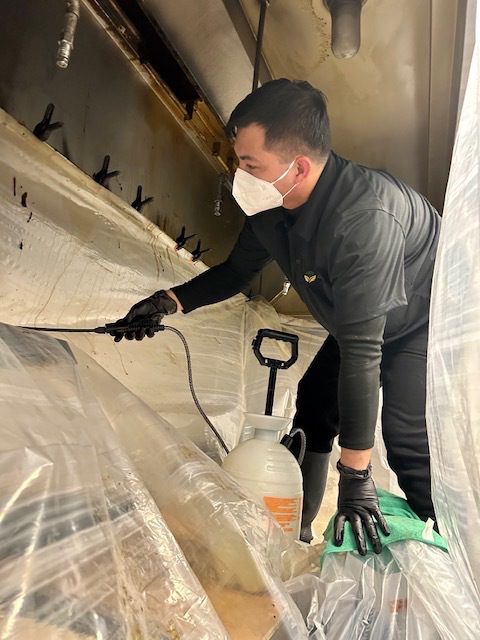
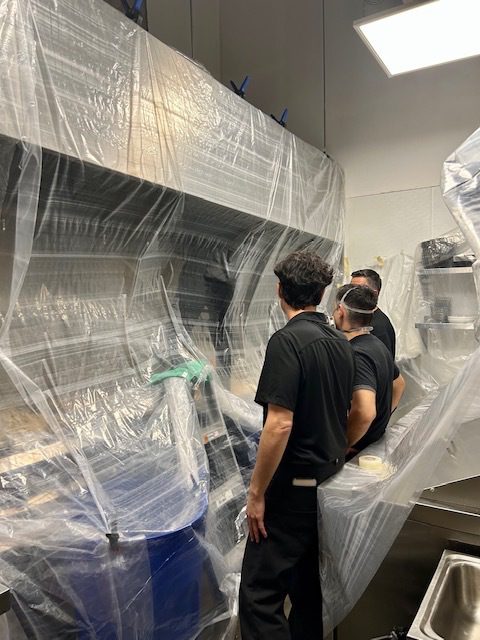
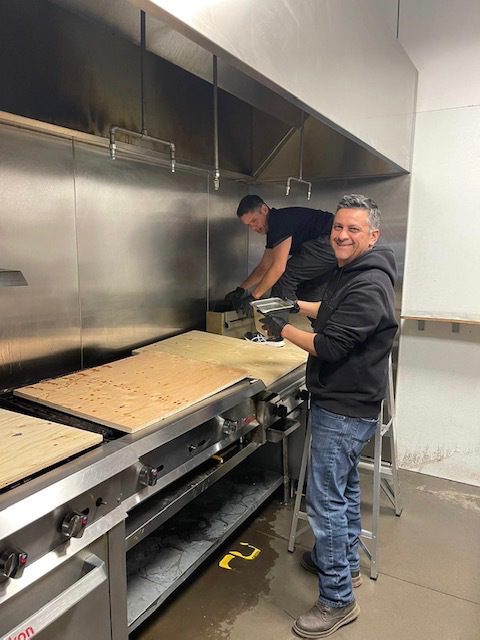
- The pilot lights of grills and fryers will be blown out, and the gas shut off. The Kitchen area the hood and adjacent to the hood will be draped in plastic, and any areas of heat such as grills will have their pilot lights put out, and plywood applied to prevent the protective plastic from touching the hot grill. The filter baffles will be removed and cleaned, if not being cleaned by the restaurant on a regular basis. This is will an extra cost to the hood.
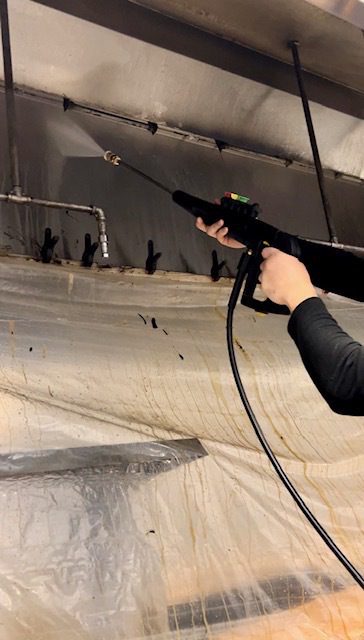
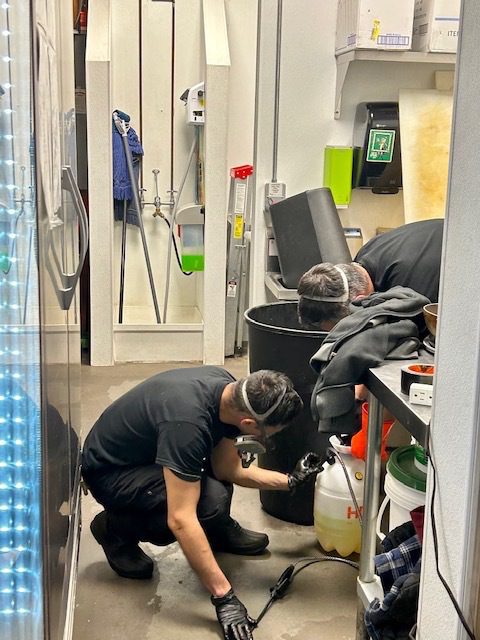
- A second plastic envelope is installed all around the Kitchen hood, creating a funnel to capture all of the waste water/grease/chemical into a plastic barrel. A third plastic sheet will be draped over the counters adjacent to the hood to prevent any potential splashes from contaminating the counter
- The cleaning team will start from the roof, and start with the fan, opening it and spraying chemical on the blades, housing and down the duct. Chemical foam (strong sodium hydroxide/potassium hydroxide, or both) and high pressure chemical application, along with manual scraping of grease in heavily accumulated areas will be done, once, or more. Following a 10 minute time to mix with the grease (saponification); high temperature hot water pressure wash is applied to all surfaces from the fan, fan bowl, and blades. And then from the top and bottom of the duct down to the hood.
- Should there be a length of duct that requires an access panel [max 12 ft: NFPA 96] the technicians will start with the access panel closest to the fan, open it, apply chemical, letting it set, then pressure washing it down toward the hood. This process will continue from the highest access panel to the lowest, and then to the hood itself. Clean It All access panel stickers will affixed on each access panel, as it is opened, cleaned, and then closed. Proof that we have been there and done the job, properly.
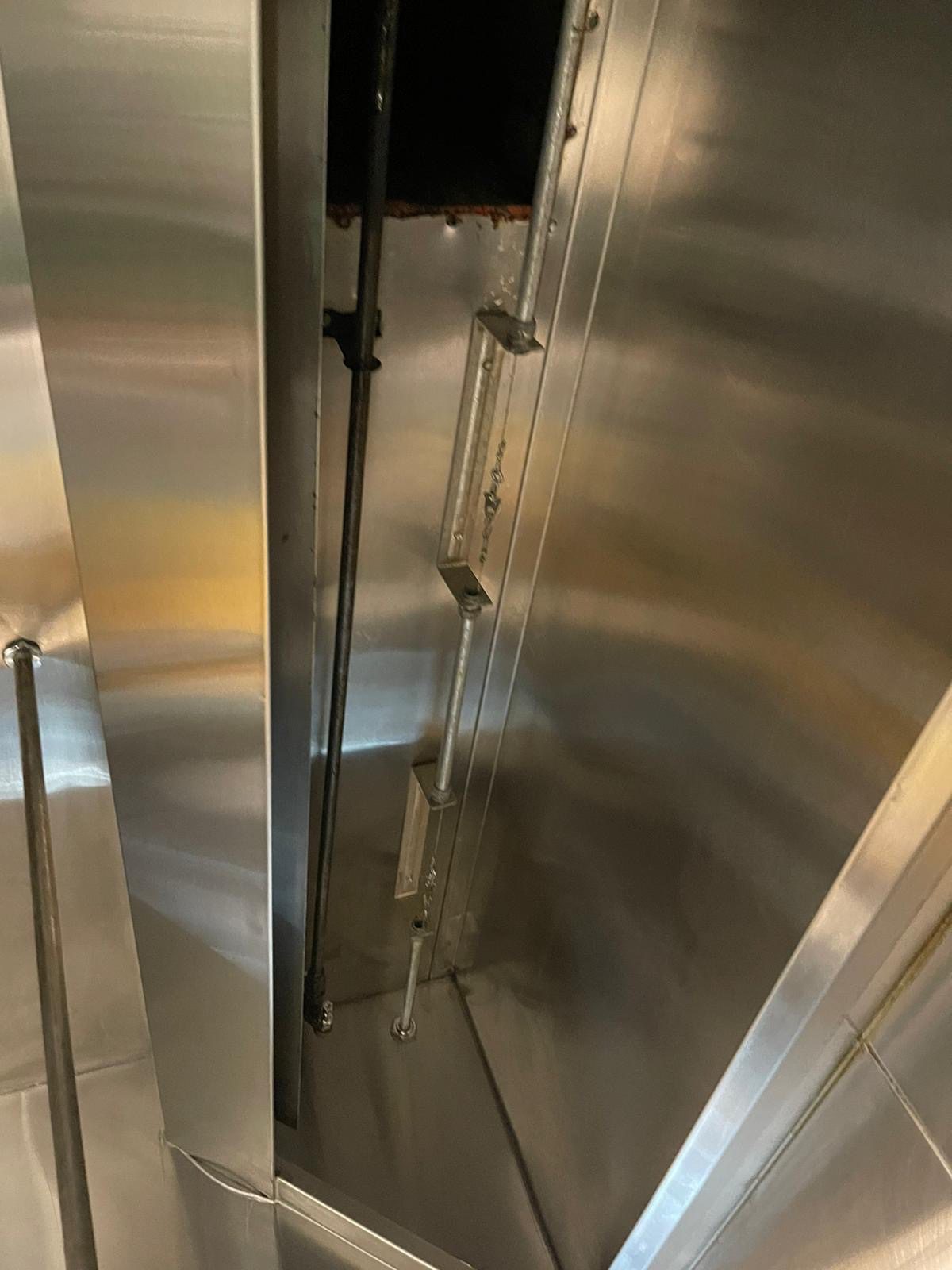
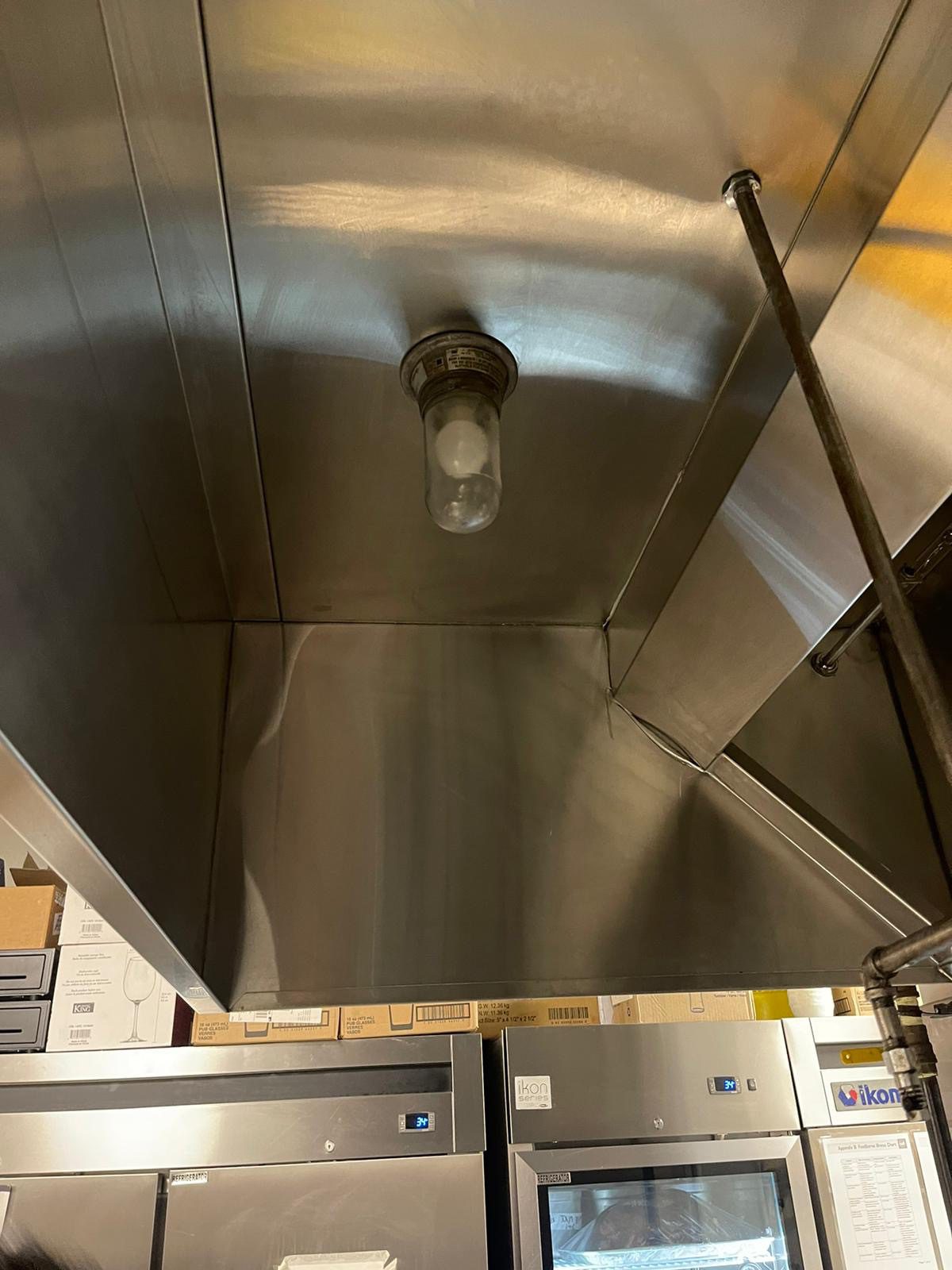
- Should the level of grease in the duct and the hood be considered heavy, manual scraping will be done prior to any chemical application and power wash. The entire fan, duct and hood will be cleaning using a combination of high pressure (2150-4000 psi), at temperatures of close to 180◦F (to break up the grease), and a synergistic combination of alkali chemicals to induce saponification with the grease. The system will be clean, down to bare metal. A Certificate of Performance will be applied to the side of the hood with the date of cleaning and recommended next cleaning (NFPA 96).
- The plastic sheets will be removed.
- The interior and outside of the hood will be wiped dry by hand, and chrome polish will be applied.
- Grease catchers and baffle filters will be cleaned and re-installed in the hood.
- The entire area will be cleaned, and mopped to the before cleaning
- The gas will be turned back on, pilot lights lit, roof fan re-started, hood fan re-started to help in expediting the drying process. After pictures will be taken of the roof fan, duct, and hood.
- An After Service report will be filled out noting any deficiencies to NFPA 96 code. This report will include what was completed, and not completed for any particular reason. Before and after pictures will be included with this report for proof of performance. An invoice will accompany the After Service report.
- Roof access to the fan and duct. For one storey buildings we can ladder up to 21’. Without roof access, we can only clean a part of the exhaust system, which for us is not satisfactory
- A water source for the pressure washer. We normally use outside the back door taps for watering landscaping. We can find them.
- 3-5 hrs of access the exhaust system. This estimate of time depends on the length of time you do between cleanings, the size of the kitchen exhaust, and the number of hoods and fans
- Cool, or warm, but not hot appliances, and removal of all pots, etc. from appliances under the hood
Kitchen exhaust cleaning is a highly specialized cleaning process. Clean It All has taken courses to be Certified as a PAC Certified Company. In order to obtain that certification, we pledged to the Organization that we would meet the standards set by PAC. Some companies clean hoods with no certification. Other Companies, even if certified, cut corners and clean only what you can see. Just because the back wall of the hood is shiny (the plenum), it does not mean the ducts and baffle channels have been properly cleaned of grease. Our before and after pictures will also provide proof positive that we have done the job thoroughly.